The website looks like a generic template
Visitors may struggle to remember or differentiate the brand when the layout, imagery and components feel similar to many competitors.
Custom website design services
We design responsive websites for businesses, SaaS companies, service providers and growing brands that need more than a generic template. From strategy and page structure to wireframes, visual direction and responsive UI, every website is shaped around how visitors understand your offer, evaluate your credibility and move toward enquiry or purchase.
We help businesses replace generic, inconsistent or difficult-to-navigate websites with custom interfaces designed around clear positioning, stronger trust and practical conversion journeys.
Visitors may struggle to remember or differentiate the brand when the layout, imagery and components feel similar to many competitors.
Important services, industries or solutions may be grouped poorly, hidden in navigation or explained without a clear hierarchy.
The current typography, colour usage, spacing and imagery may feel outdated or disconnected from the organisation’s actual quality.
Visitors may read several pages without knowing whether to enquire, book, request a proposal or explore a relevant service.
A desktop template may stack poorly on smaller screens, making content, forms and navigation harder to use.
Without reusable sections and design rules, every new page introduces different spacing, components and visual decisions.
Complete website design delivery
The final scope is shaped around your business, audience, page count and content requirements. The modules below show what a complete custom website-design project can include.
Clarification of the brand, services, target audience, website goals, content priorities and competitive context.
Planning the navigation, URL structure, page relationships and content hierarchy across the website.
Wireframes for key pages, showing content order, section purpose, calls to action and responsive behaviour.
Definition of the visual direction through typography, colour usage, imagery, layout style and interface references.
Custom desktop and mobile designs for the agreed page templates and reusable website sections.
Shared buttons, cards, forms, navigation, spacing, typography and content patterns for consistency.
Design of hover, focus, menu, form, accordion, modal and other relevant interface states.
Organised Figma files, assets, reusable components and implementation notes for development.
Featured website design project
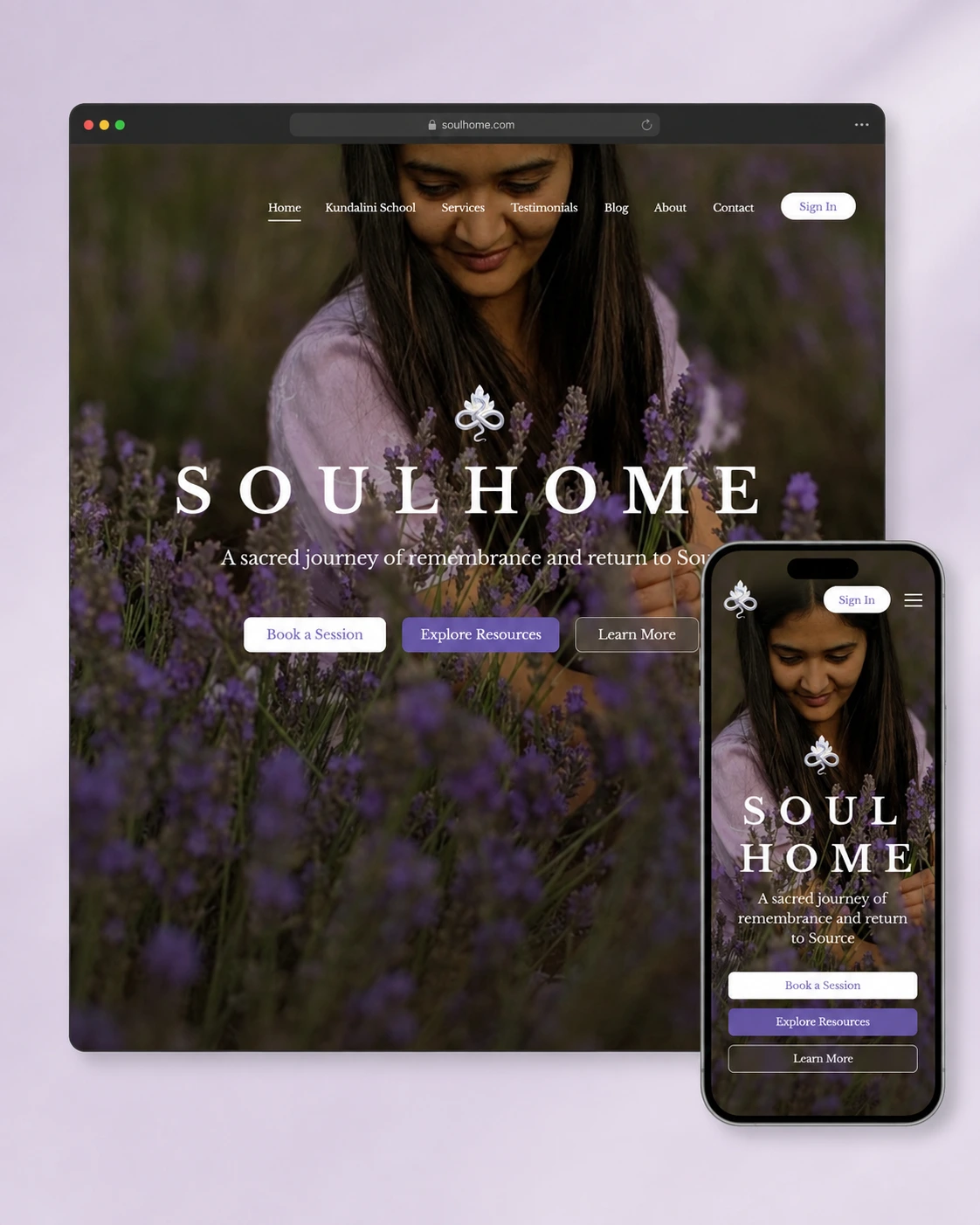
SoulHome received a complete automated journey from resource discovery to verified access. Customers could purchase resources and receive secure access without manual fulfilment, while the creator gained a more organised and scalable way to publish and manage paid spiritual and personal-growth content.
SoulHome Platform
SoulHome needed more than a standard content website. The platform had to allow the creator to organise and present multiple paid resources while ensuring that only verified customers could access the materials they purchased. The buying and delivery process also needed to work without requiring the creator to manually verify every payment and send every resource.
Frequently Asked Questions
These answers clarify the scope, design process, handoff and delivery expectations before a proposal request.
Custom website design is the process of creating a website interface around a specific brand, audience, content structure and business objective rather than relying on a generic pre-built theme.
A template provides a predefined layout and component style. Custom design allows the sitemap, page structure, visual system and responsive behaviour to be created around the actual business requirement.
Yes. Responsive behaviour is considered across relevant desktop, tablet and mobile screen sizes, with mobile layouts created for key page templates.
Yes. Website development can be scoped separately or combined with design as a complete project.
Yes. Wireframes are recommended for important pages because they clarify structure, content hierarchy and conversion flow before visual styling begins.
Yes. We can review the current website, retain useful content and improve its structure, navigation, interface and responsive experience.
Yes. Existing logos, colours, typography and brand guidelines can be translated into a practical website interface system.
A focused visual direction can be created for the website. Complete brand-identity development should be scoped separately when required.
Content structure and page guidance can be included. Complete copywriting can also be scoped depending on the number of pages, subject matter and required research.
The design can support clear page hierarchy, semantic content structure, internal linking, responsive usability and space for metadata-driven content. Technical SEO implementation takes place during development.
Yes. Reusable typography, spacing, buttons, forms, cards, navigation and content components can be organised into a website design system.
Yes. The final Figma files and agreed assets can be included according to the commercial agreement and handoff terms.
The number of revision rounds should be clearly defined in the proposal. Structured milestone reviews are recommended instead of unlimited revisions.
The timeline depends on the number of unique pages, content readiness, visual complexity, feedback cycles and approval speed. A realistic schedule is provided after scope confirmation.
Yes. Design QA, component clarification and responsive guidance can be included during the development phase.
Design a website that represents the business properly
Share your current website, services, target audience, page requirements and expected timeline. We will review the requirement and recommend a practical website-design scope.
Provide a few details about the business, website and required design scope, and we will respond with the most suitable next step.