The idea is clear but the scope keeps expanding
New features are added before the core user journey has been defined or tested.
MVP development services
We help startups, founders and businesses turn early product ideas into focused minimum viable products. From product discovery and feature prioritisation to UI/UX design, frontend development, backend workflows and deployment, the goal is to launch a usable first version that tests the core value of the idea without wasting time on unnecessary features.
We help teams identify the smallest useful version that can be launched, tested and improved with real evidence.
New features are added before the core user journey has been defined or tested.
Pitch decks and mockups may not be enough for users, investors, partners or internal stakeholders.
A full product scope may include months of work that is not required for initial validation.
The team may believe users want certain workflows, but no usable product exists to confirm that.
A working first version can help attract pilot users, gather feedback and support fundraising conversations.
A design prototype may demonstrate the idea visually but cannot handle accounts, data, workflows or actual transactions.
Complete MVP delivery
The final scope depends on the product type, core workflow, user roles, integrations and launch objective. The modules below show what a complete MVP project can include.
Clarification of the problem, target users, business model, product goal and expected validation outcome.
Definition of essential, optional and future features so the first release stays focused.
Planning of onboarding, dashboards, forms, actions, states and main user journeys.
Design of the approved MVP screens, components, states and responsive behaviour.
Development of the user-facing application using reusable and maintainable frontend components.
Development of the approved server-side logic, data processing, permissions and APIs.
Design and implementation of the product database, relationships and approved access rules.
Implementation of signup, login, password recovery, account access and approved role permissions.
Connection with selected payment, email, analytics, storage, calendar or business tools.
Quality assurance, production deployment, environment configuration and practical product handover.
Featured MVP project
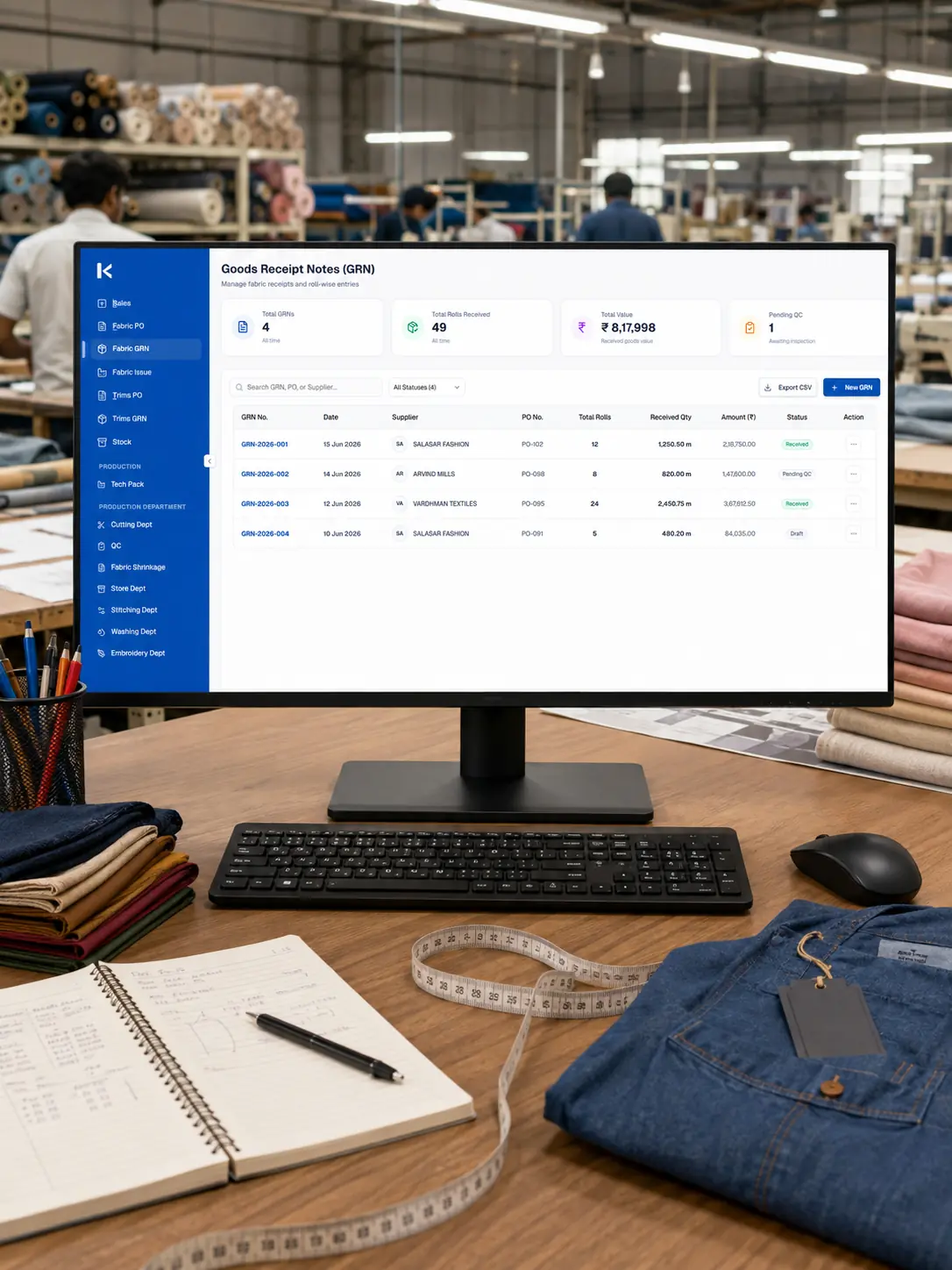
See how ZAAB Fashion launched a focused MVP to validate fabric inventory and receiving operations before committing to a factory-wide custom ERP.
ZAAB Factory ERP Phase 1
Instead of building the entire factory management system at once—which carries high adoption risk—we narrowed the first release exclusively to the procurement team and store managers.
Frequently Asked Questions
These answers clarify the scope, technical approach, risk factors and delivery expectations before starting an MVP development project.
An MVP, or minimum viable product, is the smallest usable version of a product that delivers the core value and allows the team to test important assumptions with real users.
No. A prototype demonstrates how a product may look or behave. An MVP is a working product that users can actually use to complete the main workflow.
Only the features required to support the core user journey, operate the product and test the most important assumptions.
Yes. Product discovery and feature prioritisation can be completed before design and development begin.
Yes. Strategy, UX, UI, frontend, backend, database, integrations, testing and deployment can be included in one project.
Technology is selected according to the product requirement. Common options include Next.js, React, PostgreSQL, Supabase and suitable third-party services.
Yes. SaaS MVPs can include authentication, subscriptions, dashboards, user roles, notifications and administration.
Yes, where approved AI APIs or services are suitable for the product workflow and budget.
Yes. One-time payments or subscriptions can be included through a suitable payment provider.
The MVP can use a clean and extensible foundation, but future scaling requirements should be reviewed as real usage grows.
The timeline depends on feature scope, user roles, integrations, design complexity and feedback speed. A focused MVP generally takes less time than a complete product, but no fixed timeline applies to every project.
No. An MVP reduces uncertainty and provides evidence, but product success also depends on the market, positioning, pricing, distribution and user demand.
Source-code ownership, licences, repositories and third-party services should be stated clearly in the commercial agreement.
Yes. Bug fixing, user-feedback improvements, analytics review and phase-two development can be provided through a separate support arrangement.
The team should review user behaviour, feedback, conversion and operational issues before deciding which features to improve or add next.
Turn your product idea into a testable first release
Share your idea, current stage, essential features, timeline and budget range. We will review the requirement and recommend a practical MVP scope.
Provide a few details about your product idea and what the first version needs to do.