The storefront looks like a generic theme
A standard layout may make the brand feel interchangeable and limit how products, collections and campaigns are presented.
Ecommerce development services
We design and develop ecommerce stores using Shopify for product, inventory, order and checkout management, combined with a custom Next.js frontend for greater speed, flexibility and control over the customer experience. From catalogue architecture and product discovery to cart flows, customer accounts and analytics, every part of the storefront is organised around making products easier to find, understand and purchase.
We help businesses create ecommerce experiences that combine Shopify’s reliable commerce operations with a custom Next.js frontend designed around product discovery, trust and conversion.
A standard layout may make the brand feel interchangeable and limit how products, collections and campaigns are presented.
Weak navigation, filters, categories and search can make it harder for customers to find relevant products quickly.
Important information about variants, materials, specifications, delivery, returns or suitability may be difficult to understand.
Large images, heavy scripts, poor spacing and difficult controls can create friction on the devices customers use most.
Editorial content, campaign pages, guides and product storytelling may be limited by the structure of a standard store theme.
Theme changes may create conflicts, slow performance or require repeated workarounds as the store grows.
Complete ecommerce delivery
The final scope is shaped around your catalogue, customer journey, markets, content and integrations. The modules below show what a complete Shopify and Next.js ecommerce project can include.
Clarification of products, customer groups, markets, fulfilment, payments, current platform and commercial goals.
Planning products, variants, collections, navigation, filters, content pages and customer journeys.
Wireframes and responsive interface design for homepage, collections, product pages, cart, account areas and campaign pages.
Configuration of products, collections, inventory, markets, discounts, policies and agreed Shopify settings.
Development of the storefront using reusable Next.js components connected to Shopify commerce data.
Implementation of cart journeys, Shopify checkout redirection, account access and other agreed commerce flows.
Connection with approved payment, email, analytics, reviews, search, CRM, fulfilment or customer-support tools.
Review of products, variants, cart behaviour, checkout, forms, responsive layouts, links and agreed integrations.
Planning and implementation support for importing approved data from an existing platform or structured source.
Production deployment, domain configuration, analytics checks and practical guidance for managing the store.
Featured ecommerce project
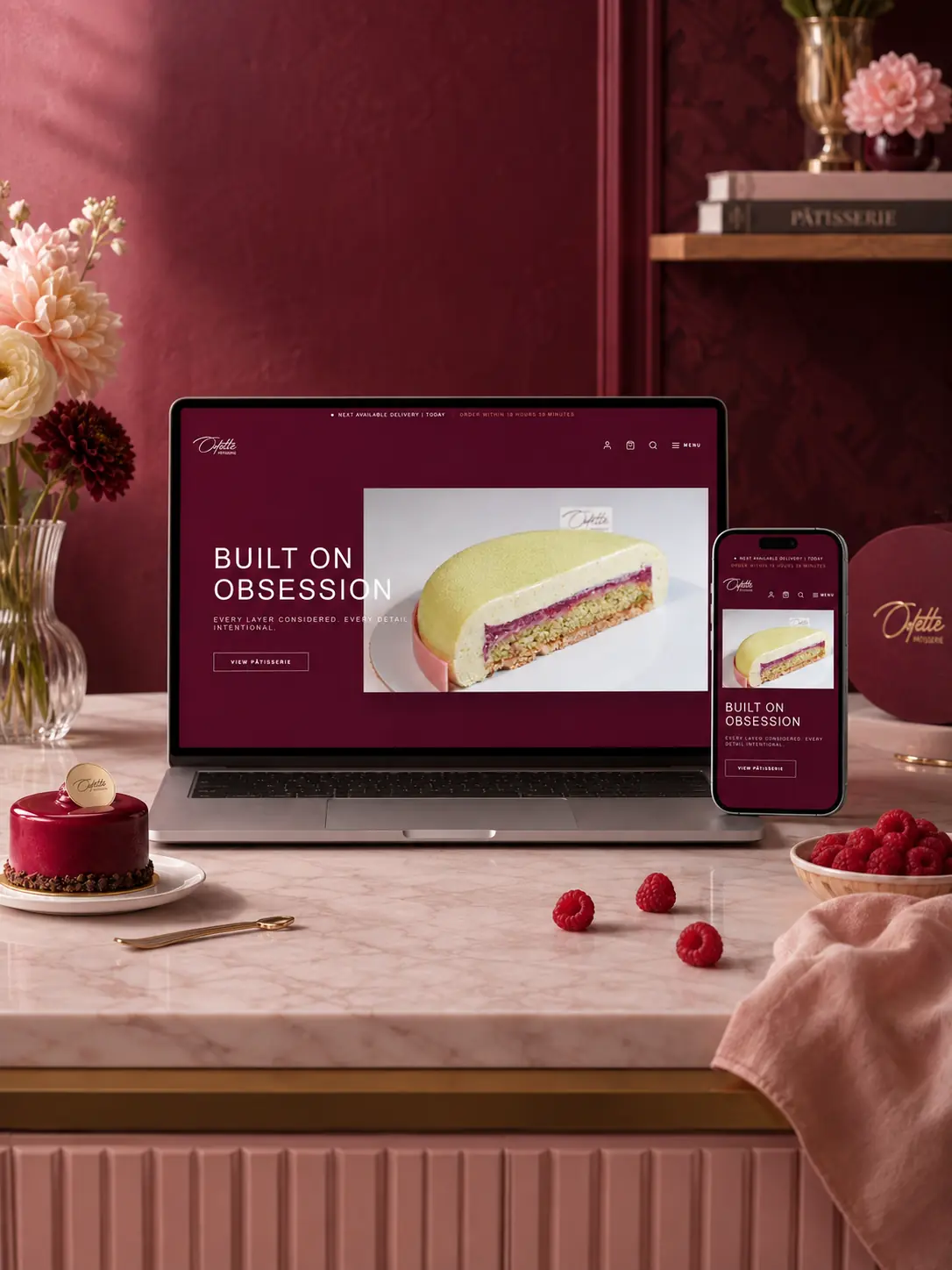
See how Odette Pâtisserie created a more visual and convenient buying experience for discovering cakes, selecting an ordering option and purchasing across desktop and mobile.
Odette Pâtisserie & Chocolatier
Odette offers luxury eggless French pastries, macarons, entremets, bonbons, celebration cakes and gifting collections in Pune. The ecommerce experience needed to communicate this craftsmanship while helping customers order confidently.
Frequently Asked Questions
These answers clarify the scope, design process, Shopify setup and delivery expectations before a proposal request.
Shopify provides established commerce management for products, inventory, orders and checkout, while Next.js provides greater control over the storefront design, content structure, performance and frontend experience.
Headless Shopify separates the customer-facing storefront from Shopify’s standard theme layer. Shopify continues to manage commerce operations, while a custom frontend such as Next.js presents the shopping experience.
Yes. Products, collections, inventory, discounts and orders can continue to be managed through Shopify Admin.
Yes. In most headless Shopify implementations, the custom storefront connects customers to Shopify’s hosted checkout for transaction processing.
Yes. Shopify setup, theme customisation and custom theme development can be scoped when a headless storefront is unnecessary.
Some Shopify apps work directly through the backend or APIs, while others depend on the standard theme environment. Compatibility must be reviewed before selection.
Yes. Product, content, customer and URL migration can be included after reviewing the source platform and data quality.
Yes. Filters and search can be implemented using Shopify capabilities or an approved third-party search service, depending on the catalogue and required experience.
Shopify Markets can support suitable regional domains, currencies, languages and product availability. The final setup depends on business and regional requirements.
Yes, through suitable Shopify applications or integrations. App compatibility with a headless Next.js frontend should be confirmed before development.
Yes. Homepage, navigation, collections, product pages, cart and key shopping interactions are developed for relevant desktop, tablet and mobile screen sizes.
No. A standard or custom Shopify theme may be more suitable for a smaller store with straightforward design requirements. Headless architecture is most useful when the business needs greater frontend control, content flexibility or custom experience.
No responsible agency should guarantee a specific conversion rate. Performance depends on traffic quality, product demand, pricing, trust, fulfilment and marketing as well as the storefront experience.
The project can include indexable product and collection content, metadata, canonical tags, structured data, internal linking and other technical SEO foundations.
Code ownership, third-party licences, Shopify access, repository access and handover terms should be stated clearly in the commercial agreement.
The timeline depends on catalogue size, design complexity, integrations, migration, content readiness and review cycles. A realistic delivery plan is provided after scope confirmation.
Yes. Ongoing technical support, storefront updates, campaign pages, integration work and performance improvements can be provided through a separate arrangement.
Plan your ecommerce development project
Share your current store, product types, required integrations, target markets and expected timeline. We will review the details and recommend a practical ecommerce development scope.
Provide a few details about your products, platform and migration requirements, and we will respond with the most suitable next step.