The developed interface does not match the design
Spacing, typography, alignment, sizing and component states may differ from the approved design, reducing visual quality and consistency.
Frontend development services
We develop production-ready frontend interfaces for business websites, SaaS products, dashboards and custom web applications. From reusable React and Next.js components to API integration, responsive behaviour and performance optimisation, we turn approved designs into dependable digital experiences that look consistent and work smoothly across key devices.
We help businesses and product teams turn design files into responsive production interfaces while maintaining visual consistency, component reuse and practical frontend architecture.
Spacing, typography, alignment, sizing and component states may differ from the approved design, reducing visual quality and consistency.
Desktop-first implementation often creates poor navigation, awkward stacking, overflow and difficult interactions on smaller screens.
When similar UI elements are rebuilt repeatedly, updates become slower and inconsistencies increase.
APIs may be connected without thoughtful loading, empty, error and success states, creating a weak user experience.
Large bundles, unoptimised images, unnecessary scripts and inefficient rendering can affect page speed and usability.
Unclear component boundaries, inconsistent styling and fragile code can make routine interface updates difficult to implement safely.
Complete frontend implementation
The final scope depends on your product, design files, backend readiness, required integrations and deployment environment. The modules below show what a complete frontend-development project can include.
Review of the design files, screen states, assets, breakpoints, interactions, component reuse and backend requirements before development begins.
Planning reusable components, page structure, routing, state requirements, data flow and implementation conventions.
Development of approved pages and product screens into reusable frontend components across desktop, tablet and mobile layouts.
Connection of frontend interfaces with APIs, forms, authentication, content systems and other agreed data sources.
Implementation of realistic interface states so users understand what is happening when data is loading, unavailable or successfully updated.
Review of layouts, interactions, forms and components across agreed browsers, devices and viewport sizes.
Image optimisation, code-splitting considerations, semantic structure, keyboard support and other agreed improvements.
Production deployment support, code handover, environment guidance and agreed documentation.
Featured frontend project
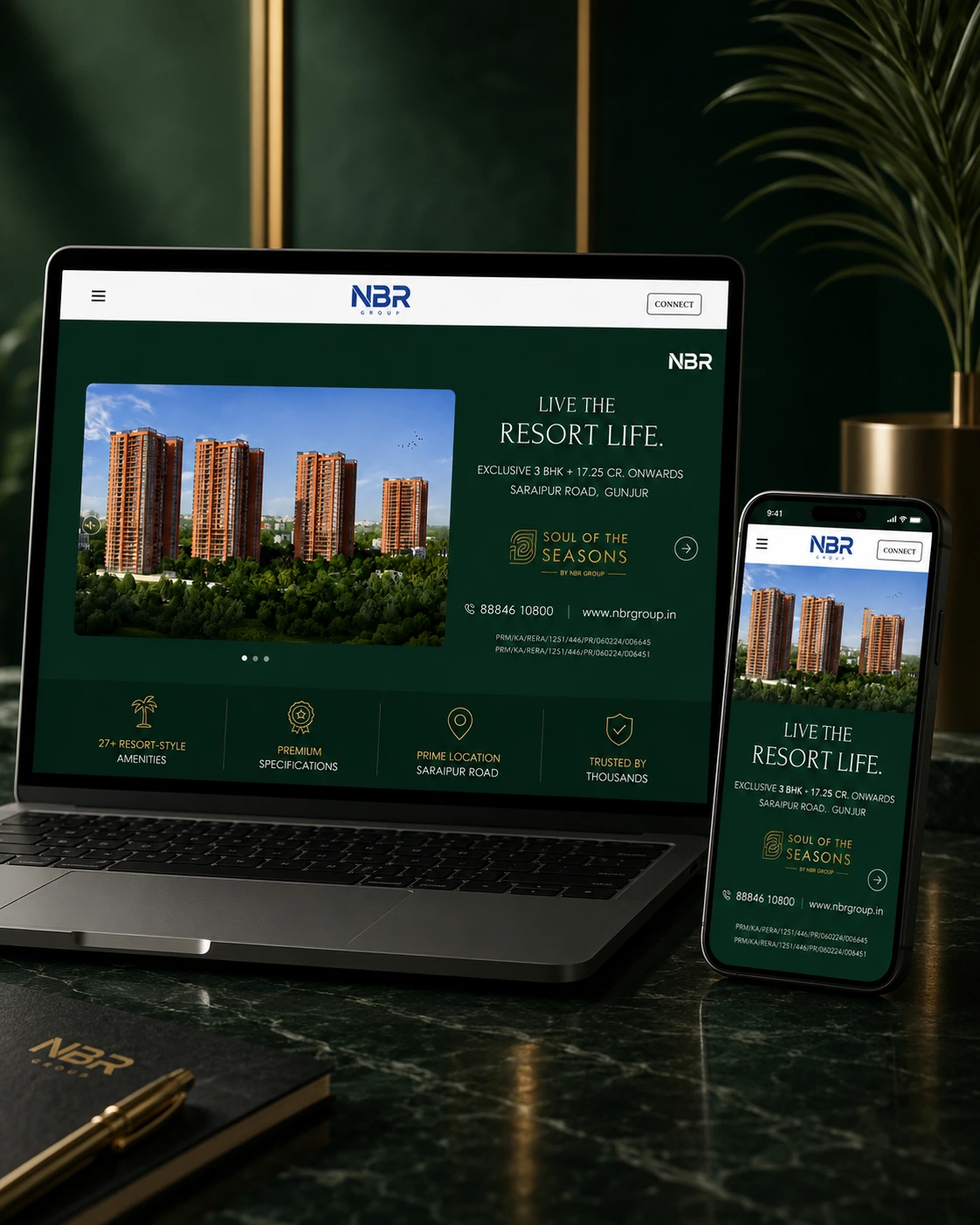
See how NBR Group, a prominent Bangalore real estate developer, translated their premium residential designs into a lightning-fast, responsive web property.
NBR Group Real Estate
NBR Group needed a frontend that matched the "value for money" and premium nature of their real estate projects, specifically catering to home buyers looking for emerging corridors in Bangalore.
Frequently Asked Questions
These answers clarify the scope, tools, alignment and delivery process before a proposal request.
Frontend development covers the part of a website or application users see and interact with. It includes layouts, components, navigation, forms, data display, responsive behaviour and connection with backend services.
Yes. We can review approved Figma designs and implement them into responsive frontend interfaces. The designs should ideally include desktop and mobile layouts, component states and required assets.
Depending on the project, we may use HTML, CSS, JavaScript, TypeScript, React, Next.js, Tailwind CSS and related frontend tools.
Yes, provided the backend exposes suitable APIs or integration methods and the required documentation or developer support is available.
Yes. We can review and improve existing interfaces for responsiveness, visual consistency, component reuse, performance or new feature implementation. Feasibility depends on the current codebase.
Yes. Layouts, navigation, components, forms and key interactions are developed for agreed desktop, tablet and mobile screen sizes.
Yes. Existing design-system tokens and components can be translated into reusable frontend code. Design-tocode alignment should be reviewed before development begins.
Yes. We can connect approved frontend interfaces with REST, GraphQL or other supported APIs, including loading, empty, error and success states.
Yes. Frontend authentication flows and protected views can be integrated with an agreed authentication service or backend system.
For public websites, the project can include semantic HTML, metadata support, crawlable content, canonical tags and other technical SEO foundations. Requirements should be confirmed in scope.
No fixed performance score should be guaranteed without controlling the full stack, hosting, third-party scripts, content and backend behaviour. We optimise the frontend around the agreed environment and measurable constraints.
Code ownership, licences, repository access and handover terms should be clearly stated in the commercial agreement before development begins.
The timeline depends on the number of pages or screens, component complexity, design readiness, API availability, integrations and review cycles. A realistic delivery schedule is provided after scope confirmation.
Yes. Frontend maintenance, bug fixes, improvements and new feature support can be included through a separate ongoing arrangement.
Turn approved designs into a working interface
Tell us what has already been designed, which screens must be built, what backend or APIs are available and when the interface needs to be delivered. We will review the requirement and recommend a practical frontend scope.
Provide a few details about the designs, technology and required implementation, and we will respond with the most suitable next step.