The current platform is difficult to manage
Routine updates may require technical support, manual workarounds or excessive time because the CMS no longer fits the team.
Website migration services
We migrate websites, content, URLs, media, forms and integrations between platforms, hosting environments and domains through a structured process. From WordPress and legacy CMS migrations to Next.js, headless platforms or new hosting infrastructure, every migration is planned around continuity, redirects, technical compatibility and controlled launch.
We help businesses migrate websites carefully so that important pages, content, forms, URLs and business functionality remain connected throughout the transition.
Routine updates may require technical support, manual workarounds or excessive time because the CMS no longer fits the team.
The existing platform, theme, plugins or hosting environment may create slow loading, unstable behaviour or scaling constraints.
The business may require a modern framework, headless CMS, improved frontend architecture or more flexible deployment environment.
Frequent downtime, weak support, poor security practices or limited deployment control may make a hosting migration necessary.
A rebrand, business restructuring or domain change requires careful URL mapping, redirects and tracking updates.
Poorly planned migrations can lose pages, metadata, internal links, backlinks and established search visibility.
Complete migration delivery
The final scope depends on the current platform, destination platform, page count, data structure, integrations and migration risk. The modules below show what a complete website-migration project can include.
Review of pages, URLs, content, media, forms, integrations, metadata, analytics and technical dependencies.
Definition of what should move, change, merge, retire or be rebuilt on the destination platform.
Creation of source-to-destination mappings for pages, categories, media, records and other structured content.
Configuration or development of the new CMS, frontend, hosting environment and required templates.
Migration of approved pages, assets, posts, products, users or other supported records.
Preparation of permanent redirects for changed, merged or retired URLs.
Reconnection of forms, analytics, CRM, email, payments and other approved systems.
Review of pages, links, media, forms, metadata, responsive layouts, redirects and functionality before launch.
Controlled release of the new website, DNS or hosting updates and production verification.
Monitoring of indexing, redirects, analytics, forms, errors and important pages after migration.
Featured internal demonstration
See how our data migration services can help businesses consolidate fragmented records, improve data quality, and move to modern cloud infrastructure with minimal operational risk.
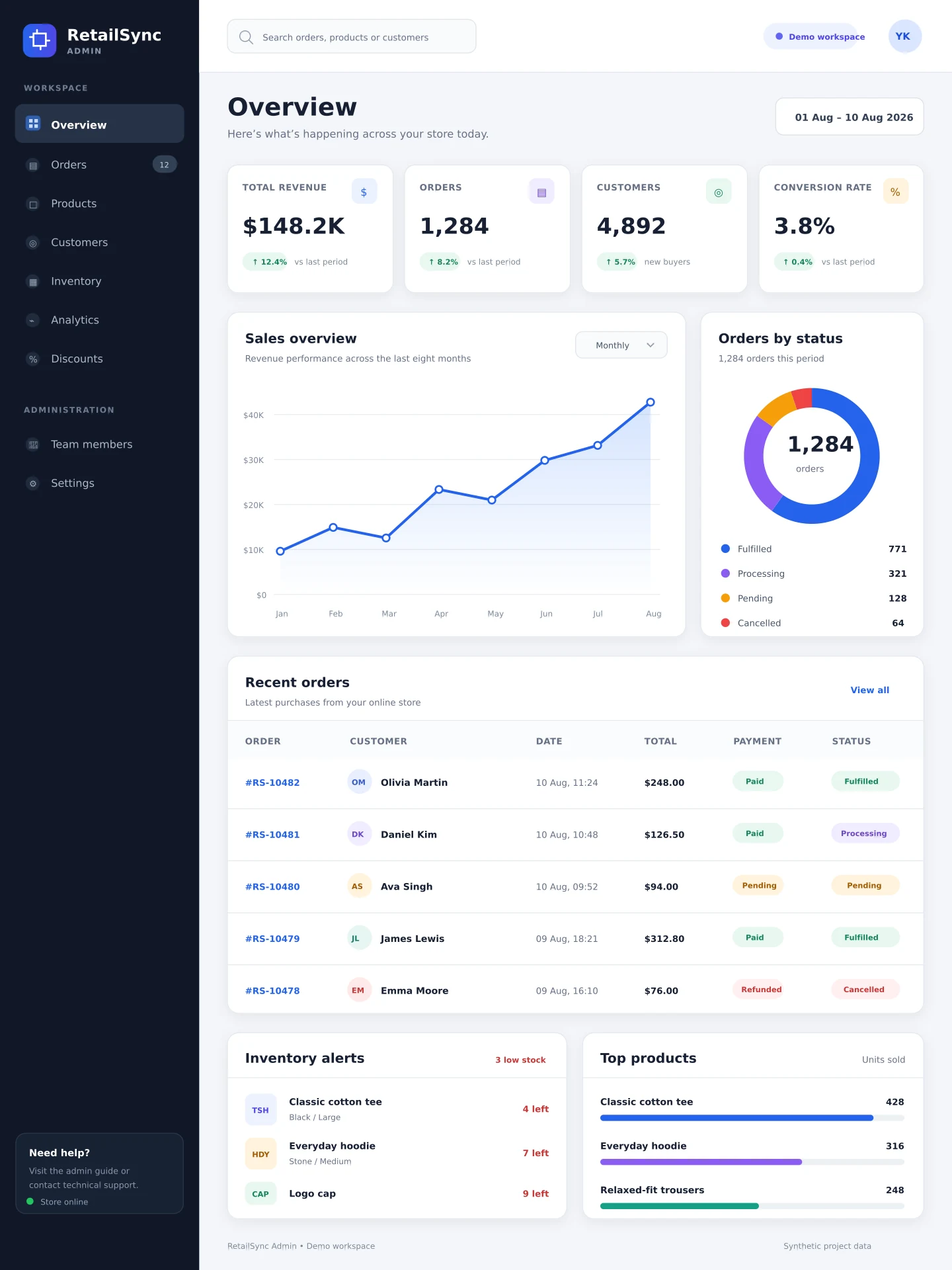
RetailSync Migration Lab — Internal Demonstration
We developed an internal data migration demonstration that transfers customer, product and order records from spreadsheets and a legacy MySQL database into a structured PostgreSQL environment.
Frequently Asked Questions
These answers clarify the scope, technical approach, risk factors and delivery expectations before starting a migration project.
Website migration is the process of moving a website between platforms, hosts, domains or technical architectures while preserving important content, functionality and URL relationships.
Yes. A website can be moved between hosts or platforms while keeping the current design where the destination supports it.
Yes. Website redesign and platform migration are often combined, but this increases the need for careful content, URL and SEO planning.
Yes. The frontend can be rebuilt in Next.js while WordPress remains the content backend, or content can be moved to another CMS depending on the requirement.
Yes. Pages, content, media and URLs can be migrated, although some platform-specific functionality may need to be rebuilt.
Rankings may fluctuate after migration. Careful URL mapping, redirects, metadata transfer and post-launch monitoring reduce avoidable risk.
Yes. Posts, categories, authors, dates, images and files can be migrated where the source data is accessible and supported.
Yes. Product, collection and customer migration can be included after reviewing the source and destination platforms.
Yes. Domain migration can include URL mapping, redirects, analytics updates, Search Console changes and post-launch monitoring.
A permanent 301 redirect sends users and search engines from an old URL to the most relevant new URL.
Plan your website migration
Share your current website, current platform, destination platform, page volume and main reason for migrating. We will review the details and recommend a practical migration scope.
Provide a few details about your website platform, size and migration requirements, and we will respond with the most suitable next step.